How to Prevent Muscle Loss After 50: The Home Strength Plan That Supports Healthy Aging
Muscle loss is one of the most important—and most modifiable—changes associated with aging. It often begins subtly. Grocery bags feel heavier. You use your hands to push up from a chair. Stairs require more effort. A suitcase that once felt manageable suddenly seems unreasonable. These changes are easy to dismiss as “just getting older,” but they are also a signal that your body needs a stronger reason to keep muscle.
Age-related loss of muscle mass and function is often called sarcopenia. It can affect balance, bone health, metabolism, recovery, and the ability to live independently. The encouraging news is that adults can gain strength well into later life. Your muscles remain responsive to resistance training; they simply need a clear, progressive stimulus and enough recovery and nutrition to adapt.
As a physical therapist, I encourage people to think beyond appearance. Muscle is not only about tone. It is your reserve capacity—the difference between what daily life demands and what your body can comfortably produce. The larger that reserve, the easier it is to climb stairs, catch your balance, travel, garden, play with grandchildren, or recover after illness.
Why Muscle Loss Happens After 50
Several factors converge with age. Hormonal changes, lower activity levels, inadequate protein intake, chronic inflammation, pain, illness, and long periods of sitting can all contribute. After an injury, many adults reduce activity but never fully rebuild the strength they lost. Others perform plenty of cardio but very little progressive resistance training.
Walking is excellent for cardiovascular health and should remain part of a complete plan, but walking alone may not provide enough resistance to maintain all major muscle groups. Muscles adapt to the challenge they repeatedly face. If the challenge never increases, the body has little incentive to become stronger.
The Three Ingredients of a Muscle-Preserving Plan
Progressive resistance
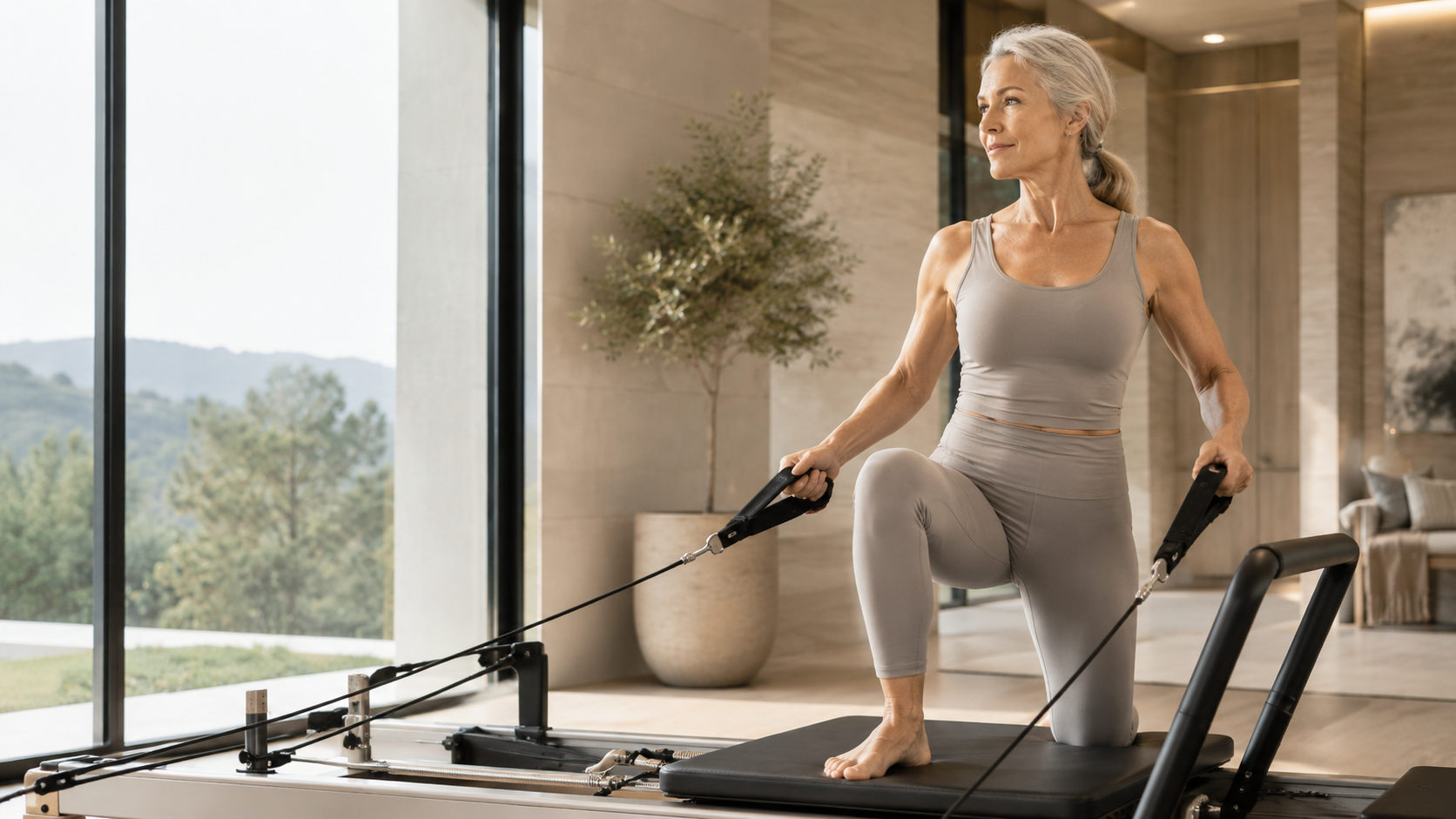
Progressive resistance means gradually asking a muscle to do more. That can involve increasing spring tension on a Pilates reformer, adding repetitions, slowing the lowering phase, expanding the range of motion, or moving to a heavier resistance band. Progression should be small enough that form remains controlled.
Adequate protein and overall nutrition
Exercise gives the body a reason to build or preserve muscle; protein provides building material. Many older adults eat most of their protein at dinner and very little earlier in the day. Spreading protein across meals may make it easier to meet needs. Your ideal intake depends on kidney health, medical conditions, medications, appetite, and total calories, so personalized advice from a physician or registered dietitian is valuable.
Recovery
Muscle is challenged during exercise and adapts during recovery. Poor sleep, excessive training, dehydration, and inadequate calories can interfere with progress. More is not always better. Most beginners benefit from two or three full-body strength sessions per week with at least one recovery day between demanding sessions.
The Functional Movements Worth Training
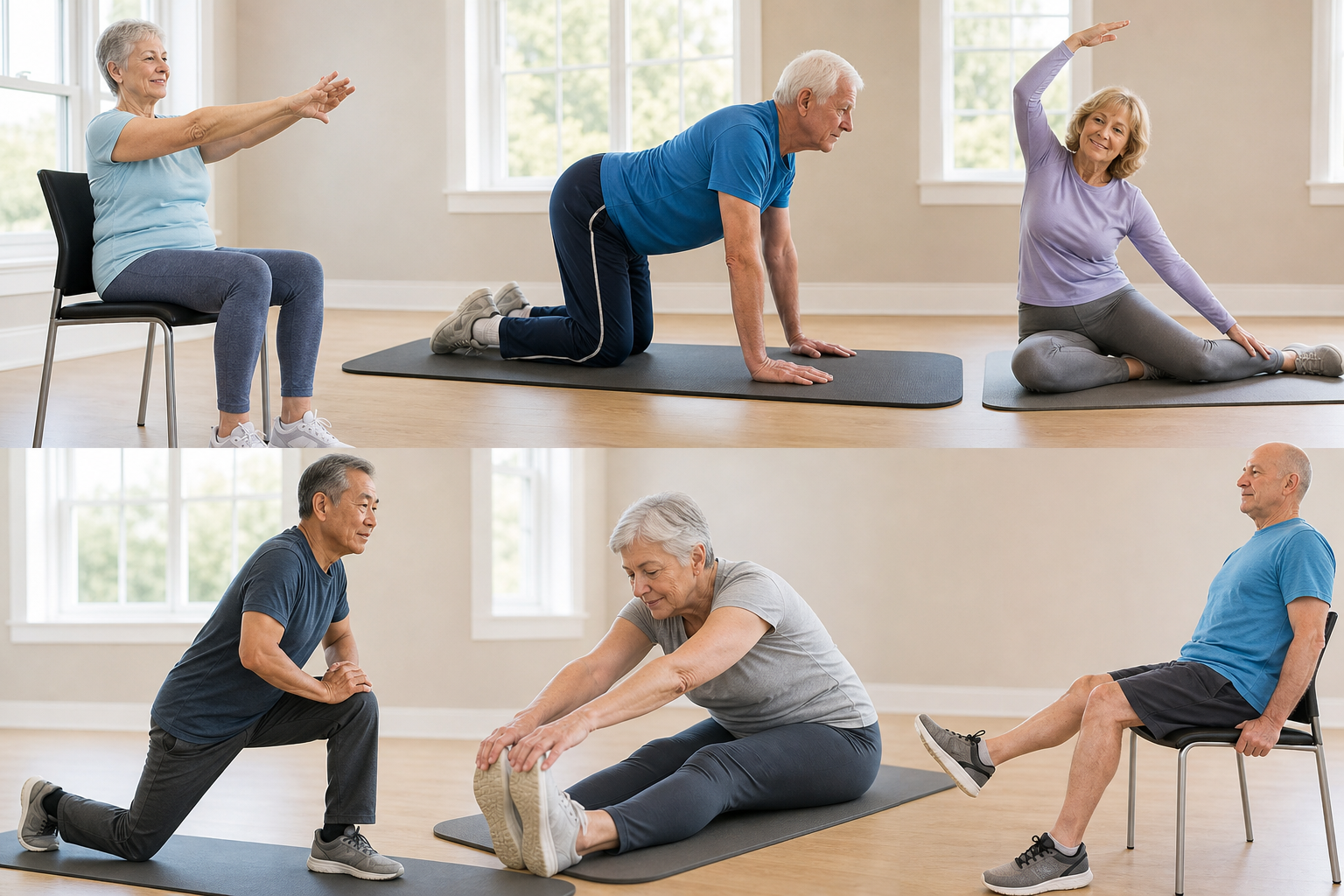
- The first is the squat or sit-to-stand pattern. It supports getting out of chairs, using the toilet, gardening, and lifting from lower surfaces. Begin from a higher chair if needed and lower the seat height as strength improves.

The second is a hip hinge, which teaches you to bend through the hips while keeping the load close to your body. This pattern supports picking up laundry, groceries, or objects from a table without overloading the spine.

- The third is pushing, such as a wall push-up, reformer arm press, or chest press. Pushing strength helps with doors, transfers, and getting up from the floor.

The fourth is pulling, such as a resistance-band row or reformer strap row. Pulling supports posture, shoulder function, and carrying tasks.

The fifth is carrying and locomotion. Walking, step-ups, farmer carries, and controlled treadmill intervals combine leg strength, trunk stability, grip, and cardiovascular endurance.

Why a Pilates Reformer Works Well at Home
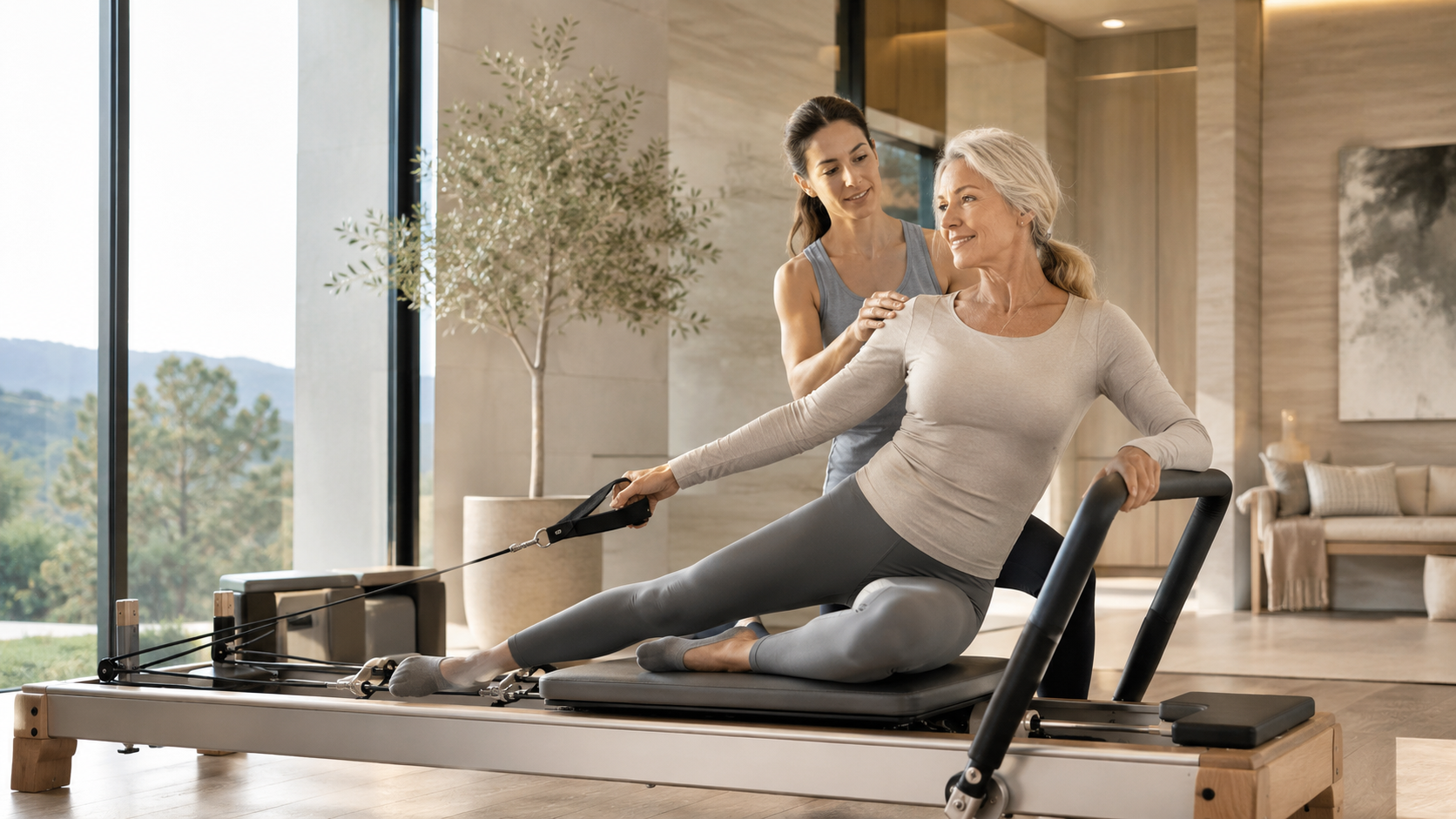
A reformer offers adjustable spring resistance and supports exercises in lying, seated, kneeling, and standing positions. This versatility is especially helpful when floor transfers are difficult or when full body weight makes an exercise too painful. Springs can assist a movement while you learn it, then provide progressively greater resistance as control improves.
Reformer training also rewards precision. Slow, controlled repetitions improve awareness of alignment and breathing. That does not mean Pilates automatically replaces conventional strength training. Some people will eventually need heavier resistance than a reformer provides for certain muscle groups. However, a reformer can be an excellent foundation, particularly for people who value low-impact exercise and variety. For my favorite pilates reformer suggestions, check these out here.
Research on Pilates in older adults is mixed. Some studies show improvements in endurance, pain, function, balance, or gait, while evidence for superior strength gains compared with other exercise remains limited. The most honest conclusion is that Pilates can be a useful and enjoyable form of resistance exercise, especially when it helps you train consistently.
Add Treadmill Work Without Sacrificing Strength
A treadmill complements resistance training by improving endurance and walking confidence. Instead of performing the same pace every day, try gentle intervals. Walk comfortably for two minutes, then increase the pace slightly for one minute. Repeat four to six times. If speed aggravates your joints, keep the pace stable and add a small incline only if you can maintain upright posture without gripping the rails.
Do your most important strength work before long cardio sessions when strength is the priority. Alternatively, separate them by several hours or place them on different days. You do not need a complicated athlete’s schedule; you simply want enough energy to perform resistance exercises with good quality.
A Beginner Home Pilates Strength Routine
Perform this routine twice weekly for the first month. Warm up for five minutes with easy walking.
Complete eight to twelve sit-to-stands.

Follow with eight to twelve reformer footwork repetitions or supported mini-squats.

Perform a row using reformer straps or a resistance band.

Add a wall push-up or reformer chest press.

Perform supported heel raises and a low step-up on each leg.

Finish with a carry: hold moderately weighted objects at your sides and walk for twenty to thirty seconds in a clear area.

Begin with one set. When you can complete twelve repetitions with excellent form and could clearly perform several more, add resistance or a second set. The goal is not exhaustion. The goal is a meaningful challenge.
Recovery Tools: Helpful, but Not the Main Event
Red light therapy and saunas use may support a recovery ritual, relaxation, or temporary muscle comfort for some people. They should be viewed as adjuncts. No recovery device can replace the mechanical stimulus of resistance training, adequate protein, and sleep.
A sauna session after exercise can feel restorative, but hydration and medical suitability matter. Red light therapy protocols vary by device, so follow manufacturer instructions for distance, duration, and eye protection. Be wary of claims that any modality can build substantial muscle without exercise.
How to Measure Progress Without Obsessing Over the Scale
Track function. Count how many controlled chair stands you can perform in thirty seconds. Note the treadmill speed you can maintain while still speaking in full sentences. Record reformer spring settings and repetitions. Pay attention to whether stairs, luggage, gardening, and household tasks feel easier.
Strength progress is rarely perfectly linear. Travel, illness, stress, and sleep can affect performance. Look for trends across four to eight weeks rather than judging one workout.
Common Mistakes to Avoid
The first mistake is starting too hard because you feel motivated. Tendons and joints may need more time to adapt than your cardiovascular system. The second is repeating the same easy routine indefinitely. Comfort is useful at the beginning, but maintaining muscle requires gradual progression. The third is training only the muscles you can see. Hips, back, calves, and grip are essential for independence. The fourth is waiting for perfect motivation. Put two short sessions on the calendar and protect them like appointments.
Strength Is an Investment in Freedom
The purpose of strength training after 50 is not to compete with your younger self. It is to give your future self more options. Every controlled repetition is a vote for easier travel, safer movement, better recovery, and greater independence.
Start with equipment that feels stable, adjustable, and inviting enough to use consistently. Elite Active Aging offers premium home fitness and recovery options designed for adults who want to keep doing what they love—not merely add years, but add capability to those years.