How to Improve Balance After 60: Safe Exercises and Home Equipment for Greater Confidence
A loss of balance can feel deeply personal. You may notice that you reach for furniture more often, avoid stepping onto curbs, hesitate on stairs, or feel less steady when turning quickly. Even one near-fall can change the way you move. Many people begin taking smaller steps and avoiding activities they once enjoyed.
That caution is understandable, but excessive avoidance can make balance worse. Balance is a skill supported by strength, vision, sensation, inner-ear function, reaction time, and confidence. Like other physical abilities, it improves when it is practiced at the right level.
Falls are a serious health concern for older adults, and national guidance consistently includes strength and balance exercise among effective prevention strategies. The goal is not to perform risky tricks. It is to build the capacity to respond when real life becomes unpredictable—a slippery floor, an uneven sidewalk, a pet crossing your path, or a momentary loss of attention.
What Balance Really Is
Balance is not a single system. Your brain combines information from your eyes, the vestibular system in the inner ear, and sensory receptors in your feet and joints. Your muscles then make rapid adjustments to keep your center of mass over your base of support.
This explains why balance may decline with poor vision, neuropathy, certain medications, reduced ankle mobility, muscle weakness, dizziness, or inactivity. It also explains why simply standing on one leg is not a complete program. A good plan trains strength, sensory input, walking, turning, stepping, and reactions.
When to Get Evaluated First
Seek medical assessment for sudden dizziness, fainting, one-sided weakness, new confusion, severe headache, chest pain, or a sudden change in walking. Recurrent falls, new shuffling, foot dragging, or a feeling that the room is spinning also deserve professional evaluation. Medication review, vision testing, hearing and vestibular assessment, and physical therapy may identify treatable contributors.
If your balance has declined gradually, a physical therapist can evaluate gait speed, lower-body strength, foot and ankle function, transfers, and fall risk. This is especially important if you use a cane or walker, have osteoporosis, or have fallen in the past year.
The Safe-Challenge Principle
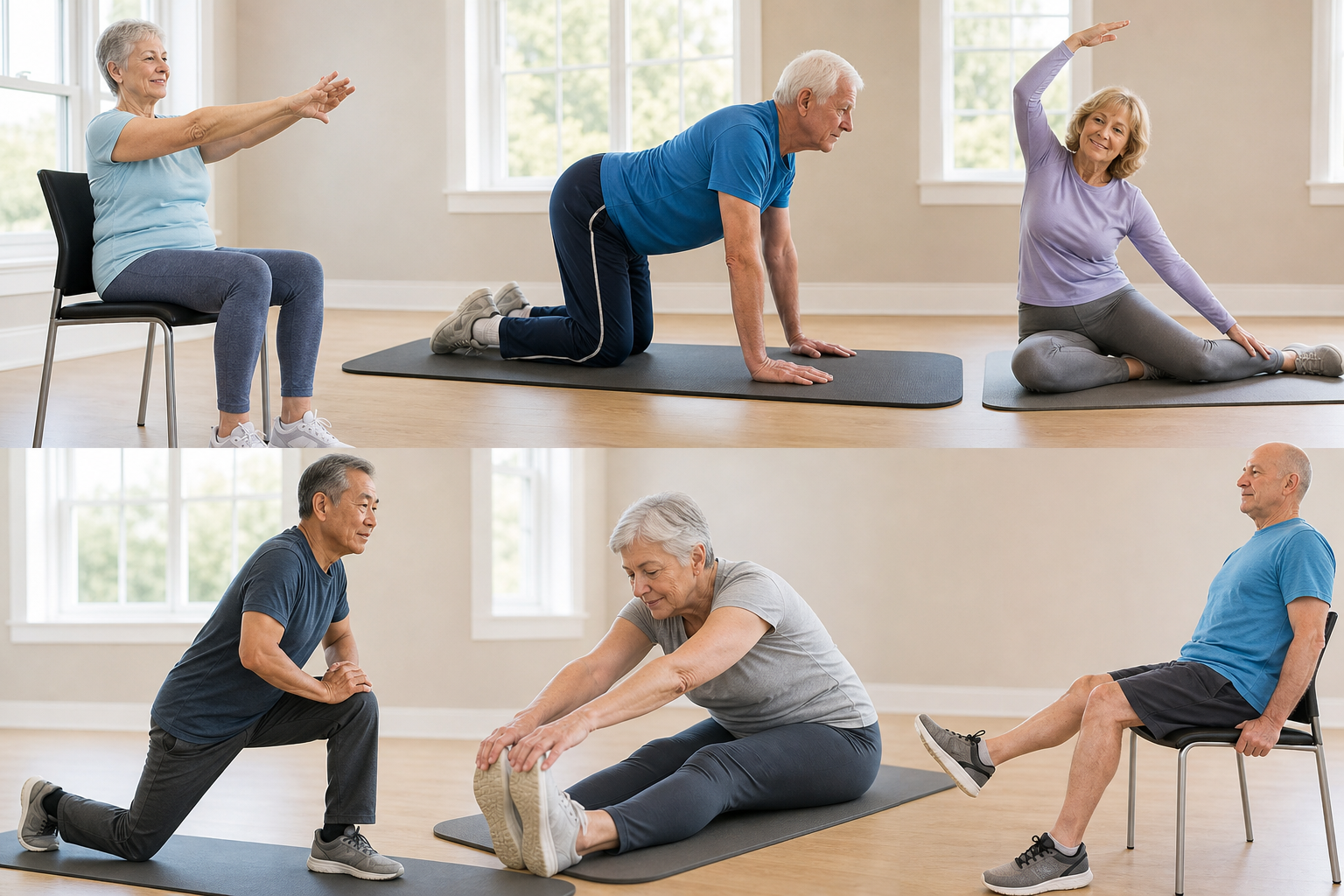
Balance only improves when the exercise is challenging enough to require adjustment. Yet the exercise must also be safe enough that a mistake does not become a fall. Practice near a sturdy counter, heavy table, or rail. Avoid unstable chairs that can slide. Have another person nearby if you are highly unsteady.
Use your fingertips for support rather than gripping tightly when possible. As you improve, reduce hand contact, narrow your stance, turn your head, change surfaces, or add movement. Change only one variable at a time.
Five Balance Skills to Train
1. Standing control
Begin with feet hip-width apart and progress toward a narrow stance, semi-tandem stance, and tandem stance with one foot directly in front of the other. Hold for ten to thirty seconds while breathing normally. Stand near support.
2. Single-leg support
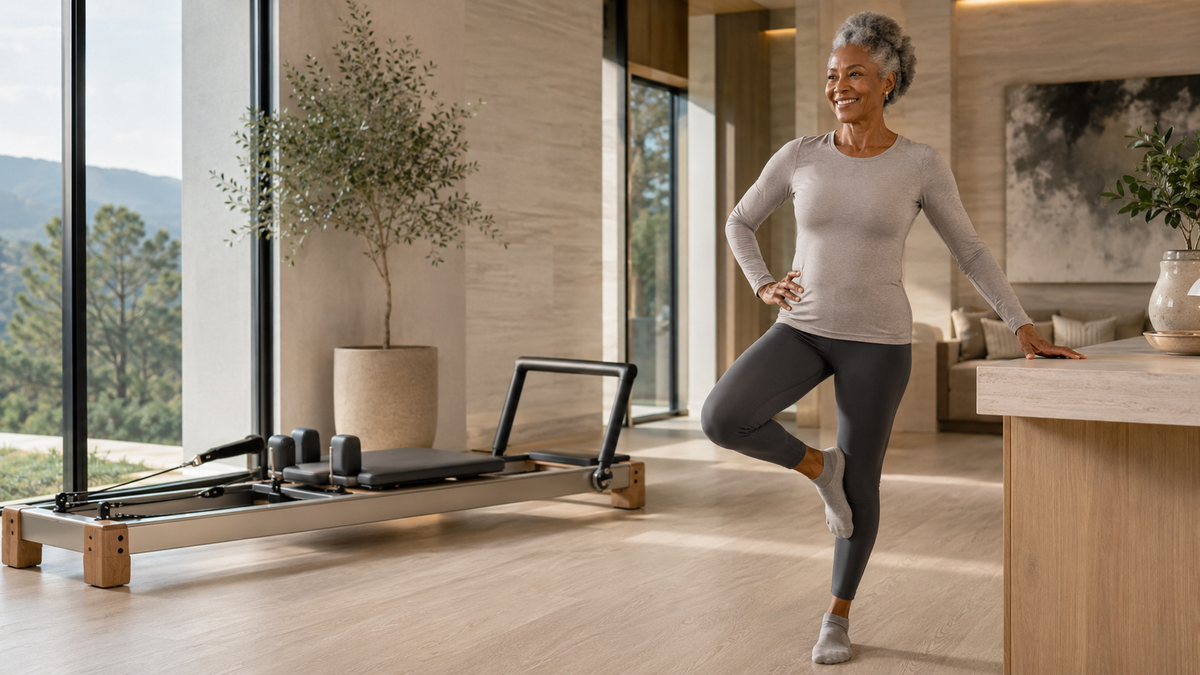
Walking requires a brief moment on one leg during every step. Practice by shifting weight onto one leg and lightly lifting the opposite heel or foot. A full single-leg stand is not required at first. Focus on keeping the pelvis level and the standing knee soft.
3. Stepping in every direction
Falls often occur because a person cannot take a fast enough recovery step. Practice forward, backward, and sideways steps while returning to the starting position. Begin slowly and add speed only after the pattern feels controlled.
4. Turning and changing direction
Many people are steady in a straight line but lose balance when turning. Practice quarter turns near a counter. Pick up your feet rather than twisting through planted legs. Progress to figure-eight walking around two objects.
5. Dual-task balance
Real life requires attention to more than one thing. Once basic walking is safe, practice naming categories, carrying a light object, or turning your head while walking. Dual-task work should be introduced carefully because it increases difficulty quickly.
How a Pilates Reformer Can Help
A reformer provides a stable platform for strengthening the hips, legs, trunk, and ankles—the muscles that support balance. Footwork can build lower-body strength while you are lying down. Bridging trains hip extension. Seated and kneeling exercises challenge trunk control. Standing reformer exercises can progress balance, but they require instruction and should not be the starting point for someone at high fall risk.
The value of the reformer is its adjustability. Springs can provide assistance, resistance, or feedback. Exercises can be modified around joint pain or limited mobility. Research has found that Pilates programs may improve aspects of functional mobility, gait, and postural balance in older adults, although more research is needed to determine how much it reduces actual falls.
Shop our recommended reformers here, or see one of our best sellers below:
How a Treadmill Can Support Walking Confidence
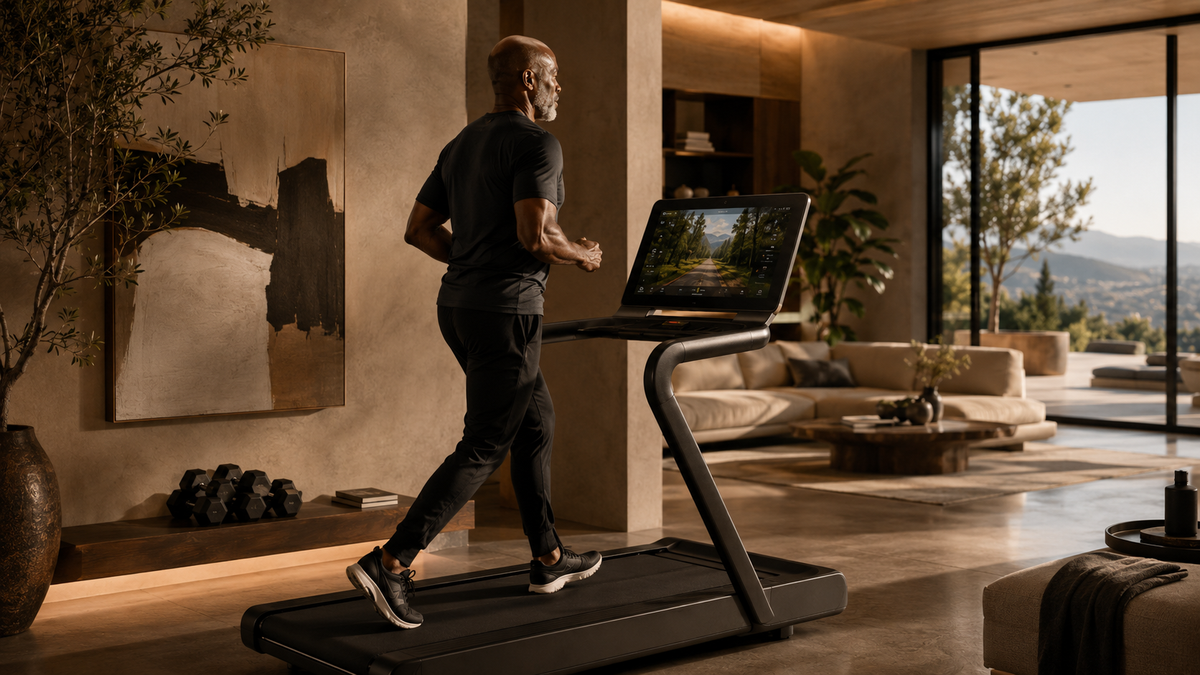
A treadmill offers a predictable, level surface and exact speed control. Handrails may provide reassurance during early sessions. However, holding the rails continuously can change walking mechanics and reduce the balance challenge. Use the lightest touch that allows safe posture, and do not increase speed until you can walk without being pulled backward on the belt.
Start the treadmill before stepping on only if the manufacturer specifically recommends it; most users should stand on the side rails, start at the lowest speed, then step onto the moving belt carefully. Always use the safety clip. Keep the area behind the treadmill clear.
Treadmill walking does not replace practice on real-world surfaces, but it can build endurance and repetition. Later, add outdoor walking in safe environments so your body learns to manage changes in lighting, surface, and direction.
Scroll our best-selling treadmills below and pick what's best for you:
A 15-Minute Balance Routine
Warm up with three minutes of easy walking. Stand at a counter and perform ten controlled heel raises. Practice a narrow stance for twenty seconds, then semi-tandem stance for twenty seconds on each side. Complete five weight shifts onto each leg. Take five steps sideways in each direction. Practice four quarter turns each way. Finish with five sit-to-stands from a stable chair.
Repeat three or more days per week. Balance responds well to frequent, brief practice. A few minutes most days may be more useful than one long session each week.
Home Safety Is Part of Balance Training
Exercise is only one layer of fall prevention. Improve lighting, secure loose rugs, clear walkways, add railings where needed, and keep frequently used items within easy reach. Wear stable footwear. Avoid walking in socks on smooth floors. Consider nightlights between the bedroom and bathroom.
Do not overlook hydration, nutrition, and medication side effects. Blood-pressure medication, sedatives, and other drugs can contribute to dizziness or slower reactions. Never stop a prescribed medication on your own; ask the prescribing clinician to review your full list.
Fear of Falling Deserves Attention
Fear can cause stiff, cautious movement. People may stare at the floor, hold their breath, shuffle or slide their feet, or reduce arm swing. These strategies can feel protective but may reduce adaptability, leading to a higher possibility of a fall. The answer is not reckless exposure. It is repeated successful practice at a level where you feel challenged yet supported.
Celebrate objective wins: using fewer fingers on the counter, turning with fewer steps, walking longer without fatigue, or stepping onto a curb with greater control. Confidence grows from practice and small wins.
Choosing Equipment for Balance Goals
Look for a treadmill with sturdy handrails, a reliable safety stop, low starting speed, and a belt wide enough to walk comfortably. A reformer should have a stable frame, non-slip surfaces, adjustable footbar, smooth carriage, and accessories that allow gradual progression. Consider the height of the equipment and whether transfers would be comfortable.
Recovery tools such as sauna or red light therapy may help you create an enjoyable wellness routine, but balance improves primarily through movement, practice and strength. Build the foundation first.
Your Balance Can Improve
Age can change balance, but age does not eliminate adaptability. The nervous system learns through repetition. Muscles respond to resistance. Confidence returns when you repeatedly complete tasks safely.
Begin beside support, like a high-backed chair or countertop. Practice often. Progress gradually. And remember that the purpose of balance training is not to master an exercise—it is to move through your home and community with greater freedom. Your wellness equipment should fit your goals, comfort, space, and lifestyle. Our experts at Elite Active Aging can help you compare home fitness equipment that supports safe, consistent practice for your healthiest and most active years. Most of all, remember: you've got this and we are here to help.