Article: Pilates Tower Reformer: What It Is and Why You Need One
Pilates Tower Reformer: What It Is and Why You Need One
The evolution of home fitness has ushered in an era where sophisticated studio-grade apparatus becomes accessible to discerning individuals seeking to preserve vitality and functional capacity. Among these innovations, the Pilates tower reformer stands as a paramount instrument—a convergence of classical Pilates methodology and contemporary biomechanical engineering that addresses the unique requirements of those committed to maintaining resilience, mobility, and corporeal autonomy throughout their mature years.
This multifaceted apparatus transcends the limitations of conventional exercise modalities by offering a comprehensive system that simultaneously builds tensile strength, enhances proprioceptive awareness, and cultivates the neuromuscular coordination essential for preventing age-related decline. Understanding the pilates tower reformer benefits requires examining not merely its mechanical attributes but the transformative potential it holds for individuals prioritizing longevity and movement quality.
What Exactly Is a Pilates Tower Reformer
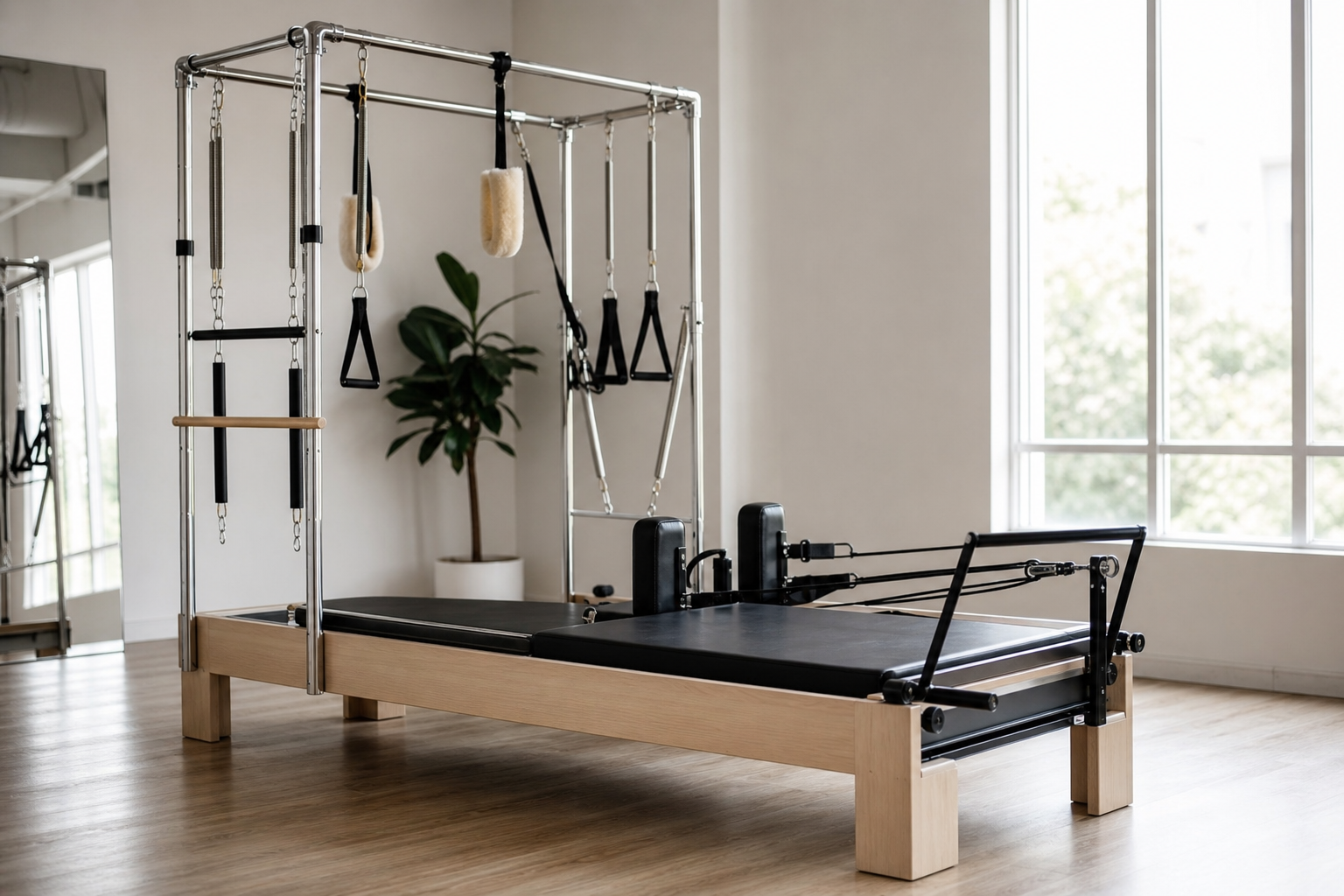
A Pilates tower reformer represents the synthesis of two foundational Pilates apparatuses: the traditional reformer carriage system and the vertical tower framework. The reformer component consists of a sliding platform mounted on rails, utilizing spring-based resistance to facilitate controlled, flowing movements across multiple planes of motion. This gliding carriage allows practitioners to execute exercises in supine, prone, seated, and standing positions with adjustable tension that accommodates varying strength capacities.
The tower element—sometimes referred to as the Cadillac attachment—introduces vertical resistance through an overhead framework equipped with springs, bars, and straps. This architectural addition exponentially multiplies exercise possibilities, enabling movements that challenge stability, balance, and muscular endurance in ways isolated equipment cannot replicate. The integration of these two components within a single footprint creates an extraordinarily versatile training environment suitable for comprehensive full-body conditioning.
What distinguishes this apparatus from rudimentary fitness equipment is its inherent intelligence in resistance delivery. The spring mechanism provides accommodating resistance that mirrors natural muscle function—lighter at movement initiation and progressively intensifying through the range of motion. This biomechanically advantageous quality reduces joint stress while maximizing muscular engagement, a critical consideration for individuals managing arthritis, previous injuries, or movement limitations.
The Eco-Pilates Reformer with Tower: A Premium Solution for Home Practice
For health-conscious individuals seeking to establish a sustainable home wellness practice, selecting apparatus that balances functional excellence with spatial efficiency becomes paramount. The Eco-Pilates Reformer with Tower exemplifies this equilibrium, delivering studio-caliber construction within dimensions appropriate for residential environments.
Crafted from sustainably sourced North American Ashwood, this apparatus combines structural integrity with aesthetic refinement. The natural wood grain brings warmth to any dedicated wellness space while ensuring the durability necessary for decades of consistent use. Its spring configuration offers five resistance levels, accommodating progression from foundational movements to advanced repertoire as strength and coordination develop.
The integrated tower framework includes a push-through bar, safety strap, roll-down bar, and leg spring attachments—components that facilitate the extensive exercise vocabulary necessary for addressing common challenges faced by active older adults: diminished core stability, reduced hip mobility, compromised shoulder function, and declining balance confidence. This comprehensive accessory suite eliminates the need for multiple pieces of equipment, streamlining your wellness investment.
The compact footprint measuring approximately 96 inches in length makes this reformer suitable for dedicated home studios, spare bedrooms, or converted garage spaces. The thoughtful engineering ensures smooth carriage glide and precise spring tension adjustment, replicating the tactile experience of premium studio equipment without the recurring membership costs or scheduling constraints.
Pilates Tower Reformer Benefits for Active Aging
The therapeutic and performance advantages of consistent tower reformer practice extend across multiple physiological systems, creating synergistic effects that compound over time. Understanding these benefits illuminates why this apparatus has become indispensable for those committed to maintaining functional independence.
Enhanced Postural Alignment and Spinal Articulation
Gravitational forces and habitual movement patterns gradually compromise spinal alignment, creating imbalances that manifest as chronic discomfort, restricted mobility, and increased fall risk. The reformer carriage provides a stable yet dynamic surface that encourages spinal elongation while the tower's vertical resistance facilitates segmental articulation—the ability to move each vertebra independently.
Exercises such as the long spine stretch, tower leg springs, and hanging pull-ups cultivate the deep intrinsic musculature responsible for maintaining neutral alignment against gravitational collapse. This targeted strengthening counteracts the kyphotic posturing and vertebral compression that accelerates functional decline, preserving the upright carriage essential for confident movement.
Comprehensive Core Stabilization Beyond Surface Musculature
While conventional abdominal training emphasizes superficial rectus engagement, tower reformer practice activates the deeper stabilization system—the transversus abdominis, multifidus, pelvic floor, and diaphragm. These foundational muscles function synergistically to create intra-abdominal pressure, spinal support, and pelvic stability necessary for all functional movements.
The unstable carriage surface combined with spring resistance creates constant demand for core engagement regardless of which extremity is moving. This integration mirrors real-world movement requirements where stability must be maintained while performing reaching, lifting, or rotational tasks. The result is transferable strength that directly enhances activities of daily living.
Joint-Protective Resistance Training
Traditional strength training modalities often impose compressive forces that exacerbate joint inflammation and cartilage degradation. The tower reformer's spring-based resistance system offers a profound alternative—tensile loading that builds muscular strength while minimizing articular stress.
The horizontal carriage orientation allows gravity-minimized positions where individuals can perform lower extremity strengthening without bearing full body weight—particularly beneficial for those managing hip or knee osteoarthritis, post-surgical rehabilitation, or chronic pain conditions.
The adjustable spring resistance accommodates precise load calibration, enabling progressive overload according to individual capacity rather than predetermined weight increments. This granular control prevents the excessive loading that triggers inflammatory responses while providing sufficient stimulus for muscle hypertrophy and bone density preservation.
Proprioceptive Refinement and Balance Enhancement
Age-related changes in vestibular function, visual acuity, and peripheral nerve sensitivity compromise proprioception—the body's spatial awareness system. This degradation directly correlates with increased fall incidence and movement apprehension that restricts activity participation.
Tower reformer practice systematically challenges balance across varying stability demands. The moving carriage creates perturbations requiring constant neuromuscular adjustment, while standing exercises on the platform with tower resistance train reactive balance strategies. This controlled destabilization environment safely improves balance confidence and postural reflexes more effectively than static balance exercises.
Flexibility and Mobility Through Active Lengthening
Conventional static stretching offers limited functional benefit and may temporarily reduce force production capacity. The tower reformer facilitates dynamic flexibility development through eccentric strengthening—lengthening muscle under tension—which simultaneously improves range of motion while maintaining stability across that expanded range.
The pulley system and adjustable straps enable supported stretching positions that would otherwise require partner assistance. Hip flexor lengthening, hamstring extensibility, shoulder mobility, and thoracic rotation can be progressively developed through controlled, spring-assisted movements that respect individual limitations while encouraging gradual expansion.
Why Home-Based Practice Matters for Consistent Progress
The accessibility factor profoundly influences adherence—the primary determinant of long-term wellness outcomes. While studio classes offer community and instruction, the practical barriers of scheduling, transportation, and availability often interrupt consistency, particularly for those managing professional responsibilities or energy fluctuations.
A dedicated home apparatus eliminates these friction points. The ability to practice during optimal energy windows, accommodate spontaneous sessions when time permits, and maintain routine during travel restrictions or seasonal challenges preserves continuity. This consistency enables the neurological adaptations and tissue remodeling that produce lasting transformation rather than temporary improvements.
Furthermore, the private environment allows exploration without self-consciousness, enabling individuals to work at appropriate intensity without comparison or performance pressure. This psychological safety encourages experimentation, modification discovery, and the mind-body connection cultivation central to Pilates methodology.
Essential Considerations Before Investing
Acquiring premium wellness equipment represents a significant commitment requiring thoughtful evaluation beyond initial financial outlay. Several factors warrant consideration to ensure alignment between apparatus selection and individual circumstances.
Space Allocation and Environmental Planning
Tower reformers require dedicated floorspace typically measuring eight feet in length and three feet in width, with additional clearance for safe movement around the apparatus. Ceiling height should accommodate the tower framework and overhead exercises, generally requiring eight-foot minimums. Evaluating your available space against these parameters prevents post-purchase regret.
The practice environment should offer adequate ventilation, appropriate flooring that prevents apparatus migration, and sufficient lighting to maintain proper form awareness. Creating a dedicated wellness sanctuary—rather than apparatus sharing space with unrelated activities—enhances the ritualistic quality that supports habit formation.
Construction Quality and Material Durability
The apparatus longevity and performance consistency depend entirely upon construction integrity. Premium hardwoods such as ash or maple provide superior dimensional stability and tactile quality compared to composite materials or softwoods. Metal components should feature stainless steel or powder-coated finishes resistant to corrosion from perspiration.
Spring quality determines resistance consistency and replacement frequency. High-grade steel springs maintain calibrated tension across thousands of cycles, while inferior alternatives lose elasticity rapidly, compromising exercise efficacy and safety. Examining these specifications before purchase prevents premature deterioration.
Instructional Resources and Movement Education
The apparatus itself represents only half the equation; understanding proper exercise execution and progression sequencing requires education. Individuals new to Pilates benefit substantially from initial private instruction to establish foundational movement patterns and safety protocols before independent practice.
Numerous online platforms now offer tower reformer-specific instruction at various skill levels, providing guided sessions that prevent plateau and ensure systematic progression. Evaluating available educational resources specific to your chosen apparatus model enhances return on investment.
Integrating Tower Reformer Practice Into a Holistic Wellness Protocol
While the tower reformer offers comprehensive conditioning capacity, its benefits amplify when integrated within a broader wellness framework addressing multiple physiological systems. This synergistic approach recognizes that optimal vitality emerges from simultaneous attention to movement, recovery, cellular health, and stress modulation.
Complementary modalities such as infrared sauna therapy enhance circulation, promote detoxification, and accelerate tissue repair following reformer sessions. The deep heating penetrates muscular layers, reducing chronic tension patterns that limit range of motion and movement efficiency. This combination addresses both strength development and tissue quality optimization.
Red light therapy panels deliver photobiomodulation that stimulates mitochondrial function, reduces inflammatory markers, and supports collagen synthesis—processes fundamental to joint health, injury prevention, and recovery capacity. Incorporating brief light therapy exposure before or after reformer practice creates an environment conducive to tissue adaptation and pain reduction.
This integrative approach—combining intelligent mechanical loading through tower reformer practice with recovery-enhancing technologies—creates a comprehensive system addressing the multifaceted requirements of active aging. Rather than addressing isolated symptoms, this protocol supports systemic resilience.
Frequently Asked Questions About Tower Reformer Practice
How frequently should I practice to experience meaningful benefits?
Research indicates that neuromuscular adaptations and strength gains emerge with two to three weekly sessions of forty-five to sixty minutes duration. Consistency proves more valuable than session length—regular brief practices outperform sporadic extended sessions. Beginners may benefit from shorter, more frequent exposures as movement vocabulary develops and neuromuscular coordination improves.
Can tower reformer practice address osteoporosis concerns?
The spring resistance system provides the mechanical loading necessary to stimulate osteoblastic activity and bone mineral density preservation. Weight-bearing positions on the carriage and standing tower exercises deliver site-specific loading to hip and spine—regions most vulnerable to osteoporotic fracture. However, individuals with diagnosed osteoporosis should work with qualified instructors to modify exercises that involve spinal flexion or excessive rotation.
What distinguishes tower reformer practice from mat Pilates?
Mat work relies primarily on body weight and gravity for resistance, which may prove either insufficient for strength development or excessively challenging for those with significant weakness. The reformer's spring system provides scalable resistance independent of body weight, accommodating precise load calibration. Additionally, the apparatus facilitates positions impossible on the mat, expanding exercise possibilities substantially.
Is previous Pilates experience necessary before using a tower reformer?
While prior experience proves helpful, it is not prerequisite. The adjustable resistance accommodates complete beginners, allowing foundational movement pattern development with appropriate support. Initial instruction—whether through private sessions, small group classes, or comprehensive online programming—establishes proper alignment principles and safety awareness essential for independent practice.
Making the Investment: Long-Term Value Perspective
When evaluating the financial commitment of premium wellness equipment, comparing against cumulative studio membership costs, physical therapy expenses, and pharmaceutical interventions for managing preventable decline provides illuminating perspective. A quality tower reformer representing a moderate four-figure investment delivers unlimited practice access across decades with minimal maintenance requirements.
The table below illustrates the comparative economics:
| Expense Category | Annual Cost | Five-Year Total |
|---|---|---|
| Premium Studio Membership (2-3x weekly) | $3,600 | $18,000 |
| Physical Therapy Co-pays (preventable conditions) | $1,200 | $6,000 |
| Tower Reformer (one-time investment) | — | $3,500 |
| Maintenance and Accessories | $100 | $500 |
Beyond financial considerations, the convenience value—reclaimed commute time, scheduling flexibility, and privacy—represents substantial qualitative benefit difficult to quantify but profoundly impactful on adherence and life quality.
The Transformative Potential of Committed Practice
The distinction between individuals who maintain robust functional capacity through their sixth, seventh, and eighth decades versus those experiencing progressive limitation often traces not to genetics but to consistent application of intelligent movement practice. The tower reformer provides the instrument; your commitment supplies the catalyst.
This apparatus facilitates the progressive challenge necessary for continued adaptation—the fundamental requirement for maintaining strength, mobility, and confidence against the entropic forces of aging. Each session represents an investment in future autonomy, in the capacity to pursue meaningful activities without physical limitation, in the confidence that your body remains a reliable vehicle for experiencing life fully.
The pilates tower reformer benefits extend beyond measurable physiological improvements into the realm of psychological well-being. The discipline of regular practice cultivates self-efficacy, the empowering recognition that you possess agency over your physical trajectory. This mindset shift—from passive recipient of age-related decline to active architect of sustained vitality—may represent the most valuable outcome of all.
For those prepared to make this commitment, selecting premium apparatus from trusted sources ensures your investment delivers lasting value. Elite Active Aging curates equipment meeting stringent quality standards, providing not merely products but the foundation for a transformative wellness practice supporting recovery, mobility, and long-term physical independence.